An ear infection – also known as acute otitis media – is an infection located in the middle ear, which is the part behind the eardrum. It is more prevalent in children than in adults.
While ear infections often go away without ear treatment being needed, in some cases treatment is used to manage the pain and clear the infection.
This is inflammation of the skin and cartilage of the outer ear. It is often due to a bacterial infection following a fairly minor injury to the ear. The ear has a very red appearance and can often exude pus like material. The patient often has severe pain. The causative organism is pseudomonas and treatment should include drugs such as Ciprofloxacin. Occasionally cartilage can be lost as a result of the infection giving rise to deformity of the ear once the infection has settled.
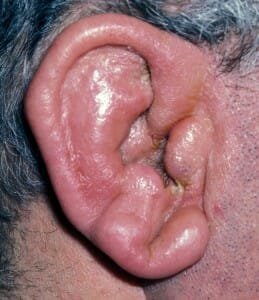
This is often due to infection in a hair follicle on the outer ear canal. It results in a small collection of pus under the skin and as there is close apposition of the skin overlying the ear cartilage it gives rise to intense pain. There can be associated hearing loss and discharge from the ear. Treatment involves lancing the mini abscess and treating with oral antibiotics. Sometimes the build up of debris in the outer ear needs to be cleared.
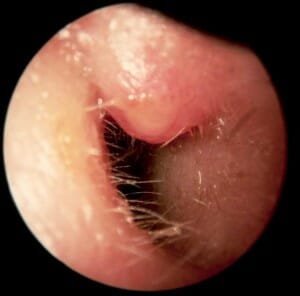
The skin of the outer ear canal is quite unique in that the surface skin cells migrate from the deep ear canal towards the outside. This process is facilitated by the production of ear wax which helps to soften the dead skin cells. Any disturbance to this process such as excessive use of cotton buds, swimming or outer ear skin conditions such as eczema can give rise to a condition known as otitis externa. Here the first symptom is usually a sense of itchiness and thereafter there can be pain, discharge and hearing loss. Sometimes the pain can be so severe and the ear canal so swollen that treatment cannot be offered in the outpatient setting and the patient may need a general anaesthetic in order that the debris can be removed. The main stay treatment at this stage is to remove any debris in the ear canal, to instil antibiotic drops/ointment and to treat the patient with oral and topical antibiotics. Very occasionally a patient needs to be admitted for intravenous therapy. In early cases treatment with topical ear drops alone can be sufficient. In an ideal world a swab is taken from the ear to see what bacteria are growing and the medical treatment can then be targeted accurately.
Although the vast majority of infections are due to bacteria it is possible to get infections due to viruses (myringitis) and occasionally due to fungus infection such as Candida or aspergillus. In addition to removing debris anti fungal preparations are instilled into the ear canal.
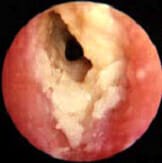
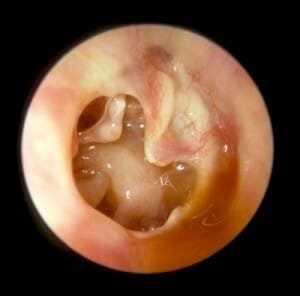
If the acute episode fails to resolve completely then the symptoms can be prolonged and when these exist for more than three months the term chronic otitis media is used. In rare occasions then there can be the patient’s own skin growing internally forming a ball of infected material (cholesteatoma). This can be associated with active infection and can slowly erode the little bones in the middle ear giving rise to hearing loss and is usually associated with smelly ear discharge. There can also be intermittent episodes of pain. Another type of chronic otitis media is when there is a long standing perforation in the ear drum and here there are episodes of ear pain associated with discharge but this condition rarely progresses to any serious condition unlike that associated with cholesteatoma.
