Hearing loss can either be congenital or acquired following birth. It can either be caused by problems of the outer ear, the middle ear or the inner ear. It can also be divided into the speed of onset of symptoms.
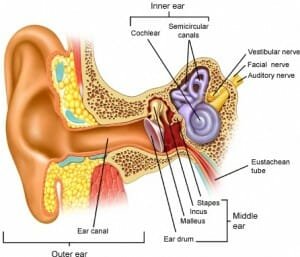
These conditions have been discussed before. Glue ear is a very common condition affecting young children and usually due to the presence of blockage of the eustachian tubes. Children have eustachian tubes which are narrower and more horizontal relative to adults. Also they invariably have large adenoids which are like tonsil like tissue sitting at the back of the nose between the opening of the eustachian tubes. The adenoid tissue is often teeming with infective agents such as viruses or bacteria and the eustachian tubes get obstructed. This results initially in a negative pressure in the middle ear and thereafter a compensatory effusion of fluid which then causes hearing loss due to the inability of the ear drum to vibrate.
In the vast majority of children this requires no treatment and is usually short lived. However if the condition lasts for over three months during the formative years it can have a detrimental effect on speech. There is also a higher chance of developing episodes of otitis media with pain, discharge and fever. Other symptoms can occur apart from hearing loss which includes poor speech development, unsteadiness and poor social integration. There appears to be increased risks of glue ear when the child’s parents smoke. Depending on the severity and duration of symptoms the patient may require grommet insertion with removal of adenoids.
